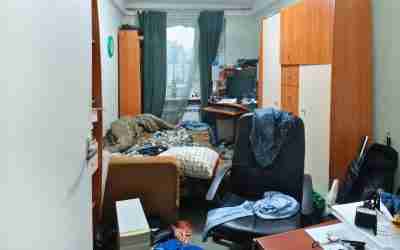
Walking out of an Arizona courtroom with a judgment for possession feels like a win, until you realize the judge awarded you zero dollars for late fees, attorney costs, or back rent. For too many landlords, this scenario plays out month after month. The tenant is gone, but so is the money you were owed.
The culprit isn’t usually the judge or the attorney. It’s the lease itself.
Most residential lease agreements in Arizona are designed to get a tenant out of the property, not to recover what they owe you on the way out the door. If your lease lacks the specific language Arizona courts require to enforce financial penalties, you’re handing money back to the tenant the moment you file for eviction.
Here are three clauses every Arizona landlord should audit before the next time rent comes up short.
1. Watch the “Junk Fee” Disclosure Landscape (HB4122 and Beyond)
Transparency around add-on fees is becoming one of the most active areas of Arizona landlord-tenant law. HB4122 would require landlords to disclose every mandatory fee, trash valet, smart-home surcharges, amenity charges, online portal fees, on the first page of the rental agreement and in any advertisement listing the rental rate. The bill is currently pending in the House Commerce Committee and has not become law, but the trend is clear.
Even under existing Arizona law, hiding fees in fine print is risky:
- A.R.S. § 33-1321(B) already requires that nonrefundable fees state their purpose in writing.
- Fees that look deceptive or that weren’t clearly agreed to are vulnerable to challenge in an eviction or collection action.
- Tenants increasingly raise fee-disclosure issues as counterclaims, complicating cases that should be straightforward.
The smart move is to get ahead of the curve now. Roll recurring fees into base rent where possible, and where you can’t, disclose every line item plainly on page one of the lease. If HB4122 or a similar bill passes in a future session, your documents will already comply.
2. Strengthen Your “Fee Shifting” and “Costs of Collection” Clauses
Arizona’s attorney-fee rules are more nuanced than most landlords realize.
In an eviction (special detainer) action, A.R.S. § 33-1368(C) allows the landlord to recover “court costs, reasonable attorney fees and all quantifiable damage” caused by the tenant, even without a fee clause in the lease. A.R.S. § 33-1315(A)(2) further confirms that a prevailing party in a contested forcible detainer action is eligible for fees under § 12-341.01 regardless of what the lease says.
But “eligible” is not the same as “guaranteed.” Fee awards remain discretionary with the court, and in non-eviction collection actions, where you’re chasing a former tenant for damages or unpaid rent only, the standard general-contract statute applies, and a strong contractual clause makes a real difference.
Two pieces of language tilt the odds in your favor:
A prevailing party clause. State explicitly that the prevailing party in any legal action arising from the lease is entitled to reasonable attorney fees and court costs. This converts a discretionary statutory possibility into a contractual expectation the court can enforce.
A costs of collection clause. This is the provision most leases skip. A properly drafted costs-of-collection clause allows your attorney to pursue the tenant for documented expenses incurred recovering the debt: skip-trace fees, process server costs, certified mail, and post-judgment collection efforts. Without it, every dollar spent collecting eats into your recovery.
One caution: § 33-1315(A)(2) prohibits lease language that automatically awards fees to the landlord regardless of outcome. Your clause must work both ways, the prevailing party recovers, whoever that is. Anything else risks unenforceability and statutory damages of up to two months’ rent.
3. The 5-Day Notice Reality and “Reasonable” Late Fees
Arizona doesn’t impose a statutory grace period before late fees can be charged on standard residential rentals (mobile home parks are different). But there is a hard statutory rule on the eviction side: A.R.S. § 33-1368(B) requires the landlord to serve a written 5-day pay-or-quit notice and wait the full five calendar days after the tenant receives it before filing a special detainer action.
That timing reality affects how your late fees should be structured, and whether a court will let you collect them.
Late fees must be “reasonable” and set forth in the written rental agreement. That language comes directly from § 33-1368(B). Arizona judges apply common-law liquidated-damages principles: a fee that approximates actual administrative costs is enforceable; a fee that looks like a penalty is not.
Practical guidance:
- A flat or modest percentage late fee that reflects real processing costs typically survives review.
- Aggressive daily fees with no cap, stacked “convenience” or “processing” surcharges, or fees that compound rapidly often get reduced, or thrown out entirely, at the eviction hearing.
- Industry practice generally treats late fees in the 5–10% of monthly rent range as defensibly reasonable, but no Arizona statute or appellate decision sets a fixed cap for non-mobile-home rentals.
- NSF fees are statutorily capped at $25 under A.R.S. § 44-6852.
A defensible structure: one clearly stated late charge, triggered after a defined window, tied to a reasonable amount, with no open-ended daily accumulation.
Why Working With an Experienced Arizona Landlord-Tenant Attorney Matters
Arizona’s landlord-tenant statutes are detailed, frequently amended, and full of traps for landlords using generic or out-of-state lease templates. The difference between a full recovery and a hollow possession judgment usually comes down to lease language drafted with the ARLTA in mind, and an attorney who knows how Arizona justice courts actually apply it.
Standard eviction firms treat your lease like a ticket to get a tenant out. We treat your lease like a contract for recovery. If your current lease is doing a fraction of what it could be, a professional audit before the next vacancy is one of the highest-leverage moves an Arizona landlord can make.
Contact us today at 520-991-5259 or email david.lippman@lippmanrecupero.com for a lease review with attorneys who focus on Arizona landlord-tenant law every day.